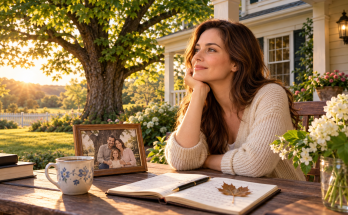
The next morning began with rain.
Emily woke early and listened to it against the windows.
She stayed in bed longer than usual.
There was nowhere she needed to be.
No hearing.
No emergency meeting.
No foundation crisis.
No appointment.
She smiled at the thought.
Then her phone rang.
It was Clara.
“Are you awake?”
“Unfortunately.”
Clara laughed.
“I have an idea.”
“That sounds dangerous.”
“Probably.”
“What is it?”
“I think we should create something new.”
Emily sat up.
“Another program?”
“No.”
“Another house?”
“No.”
“Then what?”
“A school.”
Emily paused.
“For what?”
“Financial independence.”
Emily listened.
Clara explained the idea.
A small educational program for teenagers and young adults.
Banking.
Contracts.
Taxes.
Credit.
Property.
Digital security.
How to recognize financial manipulation.
How to ask questions.
How to seek independent advice.
Not a foundation program.
Not a rescue center.
A school.
Something preventive.
Emily thought about it.
“I like it.”
“I knew you would.”
“But I'm not running it.”
Clara laughed.
“I knew you would say that too.”
They agreed to meet that afternoon.
The program took months to develop.
Marcus helped with financial curriculum.
Rebecca helped create workshops focused on family communication.
Robert volunteered to teach basic home repair and property maintenance.
Jackson offered apprenticeships through his construction company.
Anna volunteered to speak about rebuilding after financial abuse.
Even Khloe contributed a session about recognizing manipulation.
Everyone brought something.
Emily watched it happen.
No single person controlled it.
That was intentional.
The school eventually opened in a renovated community center.
The first class had twenty students.
They were nervous.
Some were bored.
One fell asleep during the banking lesson.
Emily laughed when she heard.
“That's realistic,” she said.
The students learned practical things.
How to read a bank statement.
How to freeze credit.
How to question a contract.
How to maintain private passwords.
How to avoid signing under pressure.
How to recognize when someone uses guilt as a financial weapon.
The most important lesson came at the end of every course.
You are allowed to ask for time.
Emily insisted on it.
People had rushed her for years.
Decide now.
Sign now.
Trust me.
Don't ask questions.
Don't tell anyone.
She wanted the students to hear the opposite.
Take your time.
Ask questions.
Get another opinion.
You are allowed to say no.
The first graduation ceremony was small.
Twenty students.
Twenty certificates.
Twenty families.
Emily stood in the back.
She did not want a speech.
The director insisted.
So Emily stepped forward.
“I want to tell you something I wish someone had told me when I was younger.”
The students looked up.
“You don't need to become suspicious of everyone.”
She paused.
“But you should become comfortable with questions.”
A few students smiled.
“Trust is important.”
She continued.
“So are boundaries.”
She looked across the room.
“Someone who loves you should not be afraid of your questions.”
The room became quiet.
“If a person becomes angry because you want to understand something, that anger is information.”
Emily let the words settle.
“Use it.”
When the ceremony ended, the students gathered around her.
One young man asked, “Did you really lose almost a million dollars?”
Emily nodded.
“What did you do?”
“I learned.”
“How?”
“Slowly.”
He smiled.
“That's not very dramatic.”
Emily laughed.
“Real life rarely is.”
That evening, Emily returned to Willow Crest House.
The garden was full of flowers.
The old porch had been repaired.
The library had expanded.
The house no longer felt like a monument.
It felt alive.
Clara was waiting.
“How was graduation?”
“Good.”
“Did you tell them your story?”
“Some of it.”
“Why not all?”
Emily smiled.
“Because they don't need to become me.”
Clara nodded.
“That may be the best lesson.”
They sat together.
After a while, Clara asked, “Do you ever wonder what would have happened if you hadn't gone to the wedding?”
Emily thought.
“Sometimes.”
“And?”
“I might have lived a quieter life.”
Clara waited.
“Would you want that?”
Emily looked toward the garden.
“No.”
“Why?”
“Because I like the life I have now.”
Clara smiled.
“Even with everything that happened?”
“Not because of everything that happened.”
Emily looked at her.
“In spite of it.”
That distinction mattered.
She did not romanticize suffering.
She did not believe pain had been necessary.
She did not think betrayal had been a gift.
Some things were simply wrong.
But she had the right to decide what she would build afterward.
That was different.
A few weeks later, Emily received a letter from Jackson.
He had decided to open a third housing project.
This one would include temporary apartments for people leaving financially abusive homes.
He wrote:
You showed me what rebuilding looks like. I want to help someone else rebuild.
Emily smiled.
She wrote back immediately.
I'm proud of you.
Then she added:
Keep asking questions.
Jackson replied:
Always.
The relationship between them had become simple.
That was perhaps the greatest miracle.
No accounting.
No debt.
No resentment.
No score.
Just siblings.
One evening, Robert visited Emily.
He brought a small box.
She looked at it suspiciously.
“What is it?”
“Open it.”
Inside was an old key.
Emily recognized it.
“The key to the house.”
Robert nodded.
“I don't need it anymore.”
Emily looked at him.
“Why are you giving it to me?”
“Because I think you should decide what happens to it.”
Emily held the key.
“I thought we already decided.”
“We did.”
“Then why?”
Robert smiled.
“Because I finally understand that asking is better than assuming.”
Emily laughed softly.
She closed her fingers around the key.
“Thank you.”
Robert stood.
“I'll see you Sunday.”
“Dad?”
He turned.
Emily almost never used the word.
He waited.
“I love you.”
His eyes filled.
“I love you too.”
He left.
Emily remained by the door for several minutes.
The word had been difficult.
Not because she did not feel it.
Because love had once been tangled with so many other things.
Obligation.
Fear.
Silence.
Now it could simply be love.
She walked to the desk.
The old key joined the photograph, the notebook, and Thomas's watch.
She did not lock anything with it.
She simply kept it.
A reminder that some doors could be opened.
Others could remain closed.
And she was allowed to choose.
That night, Emily wrote one final page in her notebook.
Things I choose.
She added:
To keep loving my family without becoming responsible for every choice they make.
To remember where I came from without letting it decide where I go.
To help people without owning their stories.
To accept that some wounds will always be part of me.
To stop confusing healing with forgetting.
She paused.
Then she wrote the last sentence.
To live more days looking forward than backward.
Emily closed the notebook.
She looked at the photograph of herself as a child.
The little girl was sitting beneath a tree with a book in her lap.
Emily smiled.
She wondered what that child would think if she could see her now.
Maybe she would ask why everything had become so complicated.
Maybe she would simply ask what Emily was reading.
Emily laughed softly.
She picked up a book from the shelf.
Then she sat by the window.
Outside, the city moved through another ordinary night.
Cars passed.
Lights came on.
People went home.
Somewhere, someone was beginning a new life.
Somewhere else, someone was deciding to leave.
Somewhere, a young person was opening a bank account for the first time.
The world did not stop because Emily had survived.
It kept moving.
That was the beauty of it.
She no longer needed the world to stop.
She only needed the freedom to move with it.
Her phone buzzed.
A message from Rebecca.
Breakfast tomorrow?
Emily smiled.
Absolutely.
Another message arrived.
Marcus.
Landing Friday. Coffee?
She replied:
Always.
Then Clara:
School meeting Monday. Don't be late.
Emily laughed.
She answered:
No promises.
Finally, Jackson:
Fence broke again.
Emily typed:
Fix it yourself.
His reply came immediately.
I knew you'd say that.
She put the phone down.
For a moment, she sat in silence.
Not the silence of secrets.
Not the silence of fear.
The silence of a life that no longer required explanation.
Emily looked at the watch.
4:17.
She left it where it was.
Then she opened the window.
Cool air moved into the room.
She breathed deeply.
There would be more mistakes.
More difficult conversations.
More unexpected losses.
More decisions.
There would be days when old memories returned.
There would be moments when fear reminded her of the woman she used to be.
She no longer needed to defeat that woman.
She only needed to understand her.
That frightened woman had survived.
That angry woman had fought.
That confused woman had asked questions.
That determined woman had refused to surrender.
And now another woman stood in her place.
Not untouched.
Not perfect.
Free.
Emily turned off the lamp.
She left the notebook on the desk.
The photograph remained beside it.
The key rested nearby.
The watch still showed 4:17.
Nothing needed to be changed.
She walked toward the bedroom.
Behind her, the room remained quiet.
Ahead of her was another morning.
Another ordinary day.
Another choice.
And Emily had finally learned the simplest truth of all:
She did not have to inherit the life that had been planned for her.
She could choose her own.
Click here to continue reading: PART 33: The Future Is Not a Debt
By the Time the Wedding Toasts Ended, I Discovered My Savings Had Vanished and My Family Already Knew Why
Part 32 of 35