
I had learned to recognize the sound of two children needing me at the same time.
It was one of the first things I understood after becoming the mother of twins.
One would cry.
Then the other.
Sometimes I couldn't tell which needed attention more urgently.
I would move between them, trying to do everything at once.
I thought motherhood would become easier as they grew older.
In some ways, it did.
In others, it became more complicated.
Then Brian left.
Our sons were still little.
They were too young to understand the decisions adults made.
Too young to know why a father might stop being part of their daily lives.
I was left trying to explain a situation I didn't fully understand myself.
And I had two children who still needed breakfast every morning.
Clothes.
Care.
Attention.
Somebody to notice when they were frightened.
Somebody who would come when they called.
I couldn't spend every day thinking about what Brian had done.
There was too much work in front of me.
The boys needed a mother who could function.
So I kept going.
I remember the birthdays first.
Two children born on the same day.
Two cakes to think about.
Two sets of wishes.
Two personalities that grew more distinct every year.
People sometimes spoke about twins as though they were one person divided into two bodies.
I never saw them that way.
They were brothers.
They shared a birthday.
They looked alike in ways that made strangers smile.
But they were different boys.
They had their own interests.
Their own opinions.
Their own ways of approaching the world.
I wanted each of them to know I saw him as an individual.
That mattered especially because I was the parent who remained.
There was no second adult at home to share the little responsibilities.
No one to take over when I was tired.
No one to remind me that I was worrying too much about something small.
And no one to help explain the difficult questions that came as the boys grew older.
I learned to manage.
Not gracefully every day.
Not without mistakes.
But consistently.
When they were sick, I took them to medical appointments.
I listened to instructions.
I tried to remember everything the doctors said.
Then I went home and followed those instructions as carefully as I could.
There were times when one boy felt better before the other.
Times when both needed attention.
And times when I wished I could divide myself into two people.
I couldn't.
So I did what I could.
I stayed beside them.
I made sure they knew I wasn't going anywhere.
That promise became the foundation of our family.
I couldn't promise life would be easy.
I couldn't promise nothing would hurt them.
I couldn't promise they would never feel disappointed.
But I could promise that I would keep showing up.
And I did.
When school began, our lives filled with new routines.
Homework.
Class projects.
Teachers.
Performances.
Little successes that seemed enormous at the time.
I remember how proud they were when they learned something difficult.
The way they'd look up, waiting to see whether I'd noticed.
Of course I noticed.
I was their mother.
Their excitement mattered to me.
Sometimes we sat together late into the evening while they finished assignments.
I'd watch them work through problems.
One might become frustrated.
The other might find a different way to approach the same question.
I learned when to offer help.
And when to let them work things out.
That was harder than it sounds.
When you raise children alone, there's a temptation to protect them from every disappointment.
You've already seen them lose something important.
You don't want them to lose anything else.
But I knew they needed to become independent.
They needed to learn how to handle difficulties without believing every mistake was a disaster.
So I tried to help without doing everything for them.
I wasn't always successful.
There were evenings when I worried too much.
When I asked too many questions.
When I could tell the boys wished I'd simply let them finish their work.
I learned to laugh at myself sometimes.
I needed to.
A house filled with teenage boys could be a wonderful place.
It could also be exhausting.
But those ordinary days mattered.
They were the years Brian missed.
He wasn't there for the school performances.
He wasn't there for the science fairs.
He wasn't there when homework became difficult.
He wasn't there for the family dinners when the boys talked over each other because both had something important to say.
He didn't know the small habits that made each of them unique.
He didn't know how much their interests had developed.
He didn't know how seriously they took learning.
He didn't know how often I sat listening while they explained something they were excited about.
And he didn't know how proud I felt when they became capable of solving problems I couldn't solve for them.
For thirteen years, those moments belonged to us.
I won't pretend there weren't times when I wished Brian had been there.
There were.
Especially when the boys were younger.
I remember seeing other fathers at school events.
Sometimes they stood beside their wives.
Sometimes they held younger children while watching an older one perform.
Sometimes they looked tired.
Sometimes they looked distracted.
They were ordinary parents doing ordinary things.
And I found myself wondering why my sons couldn't have that.
I didn't need Brian to be perfect.
I didn't need him to know everything.
I only wanted him to be present.
But wishing didn't make him return.
And eventually I stopped building our family life around the possibility that he might.
The boys deserved something steadier than that.
They deserved to know what they could depend on.
So we built our routines.
We celebrated their birthdays.
We attended school events.
We sat through performances.
We handled medical appointments.
We found time for ordinary dinners.
Sometimes those dinners were quiet.
Sometimes the boys talked so much I could barely keep up.
Sometimes they were tired and simply wanted to eat.
I loved all of it.
I didn't know, during those years, how much I would miss those moments once they began growing into adults.
At seventeen, the boys were changing quickly.
They needed me differently.
They could manage more of their responsibilities.
They made decisions.
They had ambitions.
And they were increasingly comfortable discussing subjects that required real concentration and discipline.
One was drawn toward applied mathematics.
The other excelled in physical sciences.
I didn't force those interests.
They developed through the boys' own curiosity and effort.
I encouraged them.
I wanted them to understand that working hard mattered more than impressing somebody else.
I wanted them to take pride in learning.
Not simply in winning.
When the opportunity came to compete at the state level, I knew how important it was to them.
They had earned it.
I could see that in the seriousness with which they prepared.
They weren't approaching the competition casually.
They wanted to do well.
But what I admired most was their determination to be ready.
They understood that talent didn't replace effort.
They knew difficult problems required patience.
And they weren't afraid to spend time working through something they didn't immediately understand.
I watched that discipline develop over the years.
Sometimes I thought about how different they were from the babies in Brian's last photograph.
Those infants had needed me for everything.
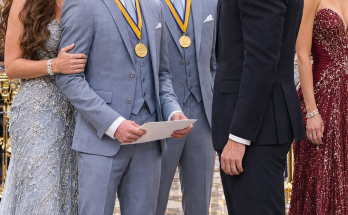
The young men standing beside me now could face a statewide competition on their own merits.
They had become people with ideas and abilities I respected.
I wasn't proud because they might win medals.
I was proud because of the work behind whatever results they received.
That was what I wanted Brian to understand.
Not that he'd missed raising two successful students.
That he'd missed knowing two remarkable people.
The distinction mattered.
My sons weren't valuable because they were academically gifted.
They'd been valuable from the moment they were born.
They'd deserved their father's love when they were babies.
They'd deserved his attention when they were learning to read.
They'd deserved his presence at birthdays and school events.
And they'd deserved it on ordinary days when nothing special happened.
Their achievements didn't create that worth.
They simply made his absence harder to ignore.
I thought about Carla and the boy standing beside her.
He wore a private-school blazer.
He was there for an important competition.
I didn't know much about his life.
I didn't know what kind of father Brian had been to him.
I could only see that Brian had arrived to support him.
And that was enough to make the contrast painful.
Brian was capable of attending an academic event for a son.
He was capable of standing beside his family.
He was capable of showing up.
He simply hadn't done those things for our twins.
For years, part of me had wondered whether he understood what he was missing.
Now I saw that he understood how to support a child.
He just hadn't chosen to support ours.
That realization hurt more than I expected.
I had thought thirteen years would make me indifferent.
I had thought seeing Brian again would be like seeing someone from a different life.
But when he stood at the registration counter beside Carla and their son, I felt the old pain return.
Not because I wanted him back.
I didn't.
Not because I envied Carla.
I didn't want her life.
I was hurt because my sons had been denied something that the boy beside Brian appeared to have.
A father who attended important moments.
A father who knew where his child was competing.
A father who understood why the day mattered.
Then Brian looked at my boys without recognizing them.
That was the worst part.
I hadn't expected him to identify every detail of their lives.
He hadn't been there to learn them.
But somewhere inside me, I must have hoped that something would remain.
A familiar face.
A shared expression.
Some instinct that would make him pause.
Instead, he looked straight past them.
I remembered the christening photograph.
The last image he'd seen of them.
It was such a small piece of their lives.
A moment when they were too young to understand what a father was.
Everything after that had happened without him.
Their first days at school.
Their growing interests.
Their achievements.
Their disappointments.
Their birthdays.
Their ordinary afternoons.
All the things that turned babies into the young men standing beside me.
Brian knew none of it.
And he seemed offended that I had arrived at the same event he was attending.
I tried to imagine how he explained our absence to himself.
Did he think about us?
Did he remember the twins?
Did he wonder what they looked like now?
I couldn't know.
I had no access to his thoughts.
But his reaction at the registration counter told me one thing clearly.
He hadn't expected to encounter us.
And he didn't welcome the possibility.
I thought about how my sons had asked whether he was their father.
That question had contained thirteen years of history.
I answered simply because there was no reason to lie.
Yes.
That was Brian.
Yes.
He was their father.
The truth didn't become less true because he hadn't acted like one.
But I didn't want the boys to confuse biology with responsibility.
They already understood what it meant to raise a child.
They had watched me do it.
They knew who attended their appointments.
Who sat through their performances.
Who helped them prepare for important days.
Who listened when they needed to talk.
They knew.
I didn't need to deliver a speech about Brian's failures.
His absence had already spoken for him.
The competition continued around us.
Students prepared.
Families waited.
The day moved toward the awards ceremony.
I tried to keep my attention on the boys.
I reminded myself that they had earned their place.
Whatever happened when the results were announced, I would be proud.
I wasn't there to prove anything to Brian.
I wasn't there to embarrass Carla.
And I certainly wasn't there to compete with their son.
I had come because my twins had worked hard enough to reach a statewide academic event.
I wanted to watch them take part.
That was all.
Still, I couldn't stop thinking about what would happen if their names were called.
Their surname was Campbell.
Brian had heard it before.
It belonged to the family he'd left.
Would he recognize it?
Would he look toward the stage?
Would he understand that the young men he'd dismissed were his own sons?
I didn't know.
And I didn't want to spend the afternoon waiting for his reaction.
The boys deserved more than that.
So I tried to set those thoughts aside.
I concentrated on the competition.
On the schedule.
On the ordinary details of being a parent at an important school event.
I told myself the morning's encounter was over.
Brian could sit with Carla and their son.
I could sit with mine.
We didn't need to speak again.
I had no idea that the awards ceremony would bring the truth into the open without any explanation from me.
And I didn't realize my sons had already begun thinking about the encounter in a way I hadn't understood.
I thought their silence meant confusion.
I thought they needed time.
I was wrong about that.
But I wouldn't understand why until later.
Click here to continue reading: PART 3: At Four O’Clock, the Awards Ceremony Began, and My Sons’ Names Revealed More About Their Father Than Any Argument Ever Could
I Brought My Twin Sons to the Most Important Competition of Their Lives, Never Expecting to Find the Father Who Had Forgotten Them
Part 2 of 5

One Comment on “PART 2 – While My Sons Prepared to Compete, I Remembered Thirteen Years of Raising Two Boys Alone While Their Father Built Another Family”